
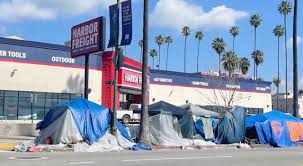

LA Homelessness Declines for Second Year — But Crisis Still Far From Over
For the second year in a row, Los Angeles County has reported a decline in homelessness, signaling a potential shift in a crisis that has long overwhelmed the region. According to the Los Angeles Homeless Services Authority (LAHSA), the 2025 point-in-time count found 72,308 people experiencing homelessness, a 4% decrease from the previous year and a 4.3% drop from its 2023 peak of 75,518.
While Los Angeles Mayor Karen Bass and regional officials are celebrating what they describe as meaningful momentum, experts and advocates warn that a reduction — however modest — should not be mistaken for a solution.
By the Numbers: LA’s Homelessness in 2025
-
Total Homeless Population (2025): 72,308
-
Change from 2024: ↓ 4%
-
Change from 2023 peak: ↓ 4.3%
-
Unsheltered Homeless (City of LA): ↓ 7.9% since 2024
-
Chronic Homelessness: ↓ 22% since 2024 (~6,000 fewer people)
-
Sheltered Homeless Population: ↑ 4.7%
For the first time, LAHSA’s annual count was conducted entirely digitally, a step intended to improve accuracy and speed, though it has also led to scrutiny over discrepancies with independent estimates.
Mayor Bass Declares Progress — and Urgency
Mayor Karen Bass, who declared a state of emergency on homelessness on her first day in office in 2022, welcomed the drop as historic:
“For the first time in our city’s recent history, homelessness has gone down two years in a row.”
Bass attributes the trend to a multi-pronged approach, including:
-
Encampment resolutions
-
Investments in interim and permanent housing
-
Rapid rehousing initiatives
Governor Gavin Newsom texted Bass congratulations before her press conference, signaling state-level alignment on what has become California’s most pressing humanitarian and political issue.
What’s Behind the Numbers?
Unsheltered vs. Sheltered Dynamics
A 7.9% drop in unsheltered homelessness in the City of LA is notable, especially given that two-thirds of unhoused Angelenos live without shelter. Meanwhile, the rise in sheltered individuals suggests that outreach efforts and temporary housing investments are making an impact.
However, advocates warn this shift may reflect short-term movement rather than long-term solutions.
“We’ve made real progress towards ending homelessness, and we cannot let that momentum falter now,” said Va Lecia Adams Kellum, CEO of LAHSA.
Disparities Persist
As in previous years, people of color—particularly Black and Latino residents—remain disproportionately represented in the unhoused population, underscoring the intersection of housing instability with systemic racism and income inequality.
Policy Wins or Pressure Tactics?
Newsom’s Crackdown on Encampments
The drop in homelessness comes amid an increasingly aggressive statewide push to dismantle encampments, backed by a 2024 U.S. Supreme Court ruling that allows cities to criminalize public sleeping — even if no shelter beds are available.
In February, Governor Newsom warned cities they could lose hundreds of millions in funding if they failed to show “real progress.” In May, he upped the ante, urging local governments to ban encampments outright.
While such tactics may contribute to fewer visible encampments, they risk pushing people further into isolation, according to critics.
Is the Data Trustworthy?
LAHSA’s digital count marks a technical upgrade, but it hasn’t escaped scrutiny. A Rand Corporation report released this month suggested LAHSA’s figures underestimate the true scale of homelessness.
Adding to the friction, in April, the LA County Board of Supervisors cut funding to the joint county-city homelessness initiative, redirecting support to a new, county-run agency.
“This might be the last count LAHSA conducts if budget cuts continue,” warned Adams Kellum.
Voices From the Frontlines
A City Councilmember’s Take
City Councilmember Katy Yaroslavsky put the results into sobering context:
“We’re still in a crisis, but for the first time in a long time, we’re seeing the tide start to turn. We’ve learned a lot over the past few years about what it takes to resolve encampments and get people housed for good.”
Homeless Services Leader Urges Compassion
Dennis Oleesky, CEO of Los Angeles Mission, offered a tempered view:
“Any reduction is a step in the right direction. But this is a humanitarian crisis, not a political one. A 2% dip is better than an increase, but it’s a wake-up call. Policy tweaks won’t solve this — we need bold, compassionate action and shared accountability.”
A Crisis at a Crossroads
For executive leaders in real estate, social impact, and urban development, LA’s homelessness trends offer strategic signals:
1. Policy Alignment Is Driving Short-Term Gains
Local and state governments are finally acting in coordination, producing tangible results — but long-term housing supply remains the bottleneck.
2. Housing Is Infrastructure
Addressing homelessness requires investing in housing like roads or power lines — as essential civic infrastructure. CEOs in the private sector have a role to play, from impact investing to modular housing innovation.
3. Compassionate Strategy Is Competitive Strategy
Cities that tackle homelessness effectively attract more talent, reduce crime, and build economic resilience. Being part of that solution positions companies as community leaders.
4. Scrutiny Demands Transparency
Data accuracy and accountability will only grow more important. Expect private audits, AI-led counts, and new KPIs for homelessness interventions in public-private partnerships.
What’s Next? Housing Overhaul and Budget Battles
Earlier this month, California voted to overhaul landmark environmental rules to fast-track housing development, a signal that building, not just banning, is now on the table.
But budget battles loom. LAHSA’s diminished funding could weaken continuity, just as momentum builds.
The city stands at a pivot point: double down and scale progress — or risk backsliding into crisis.