
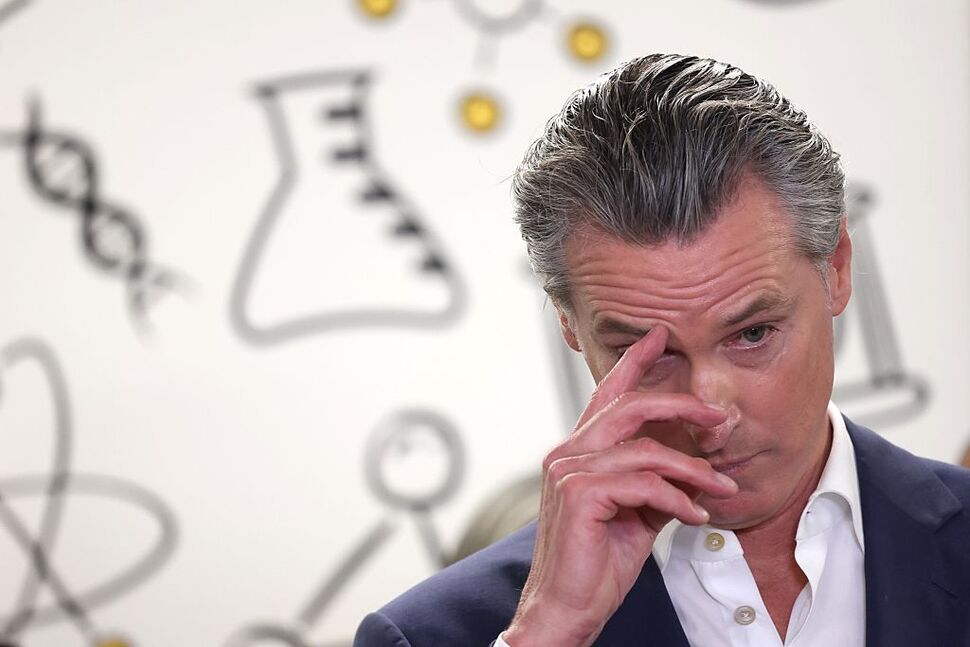
The long-simmering feud between President Donald Trump and California Governor Gavin Newsom has erupted into a full-blown confrontation, with the streets of Los Angeles becoming the battleground.
What began as a dispute over immigration enforcement has transformed into a constitutional clash over federal and state authority, military deployment, and political survival. At the heart of the issue: Trump’s controversial decision to send National Guard and U.S. Marines into Los Angeles to control escalating protests without Newsom’s consent.
This showdown is more than a local skirmish—it’s a high-stakes political battle that could shape the national landscape heading into 2028.
The Trigger: Protests Over Immigration Raids
Protests Ignite Federal Response
Tensions flared after immigration raids in Los Angeles and surrounding areas sparked widespread protests. As demonstrators clashed with law enforcement, Trump ordered the deployment of the National Guard and Marines to the city—bypassing California’s state leadership.
The move has been widely criticized by legal experts and state officials who question the president’s authority to militarize American streets without gubernatorial approval.
Trump’s Justification
Trump defended his aggressive approach on social media, claiming his intervention prevented the city from descending into chaos.
“If I didn’t ‘SEND IN THE TROOPS’ to Los Angeles the last three nights, that once beautiful and great City would be burning to the ground right now,” Trump wrote.
He went further, taking personal jabs at Newsom and the city’s leadership, blaming them for previous wildfire disasters and accusing them of incompetence.
Newsom Fights Back: Legal and Political Resistance
Governor Newsom’s Legal Challenge
Governor Newsom has fiercely opposed Trump’s decision, calling the military deployment a “blatant abuse of power.”
“U.S. Marines serve a valuable purpose for this country – defending democracy. They are not political pawns,” Newsom said, accusing the administration of using the military for political spectacle ahead of Trump’s upcoming parade.
Newsom filed an emergency request in federal court to block the federal deployment, arguing that the president’s actions violated the Posse Comitatus Act, which limits the use of federal military forces for domestic law enforcement.
However, the judge denied the emergency request, allowing Trump’s military presence to continue while scheduling a formal hearing for Thursday where the Trump administration will be required to defend its actions.
A $134 Million Military Operation
Defense Secretary Pete Hegseth confirmed the scale of the deployment, stating that the National Guard and Marine presence will cost at least $134 million over 60 days.
The size and cost of the operation have drawn additional criticism, with opponents arguing that the funds could be better used for community programs or policing reforms rather than military occupation.
The History: A Longstanding Feud
Years in the Making
The current standoff is the latest episode in a years-long rivalry between Trump and Newsom. The two have clashed repeatedly over issues ranging from climate policy to immigration, each using the other as a political foil.
Trump has frequently mocked Newsom, calling him “Newscum” in public and online. Yet despite the public animosity, the relationship has not always been hostile.
Just four months ago, the pair appeared to temporarily reconcile during Trump’s visit to California amid devastating wildfires. In a rare moment of unity, they were photographed shaking hands and cooperating on emergency response efforts.
The Presidential Ambitions
Political analysts believe Newsom is positioning himself for a 2028 presidential run, and Trump’s actions may serve to elevate Newsom’s national profile as a Democrat willing to stand up to the president.
For Trump, this showdown fits neatly into his broader strategy of confronting Democratic governors and portraying himself as the law-and-order president. The Los Angeles situation provides him with a visible platform to reinforce this image as he navigates his second term.
Legal Questions: Does Trump Have the Authority?
The core legal issue centers on whether Trump can unilaterally deploy federal troops to a U.S. city without state approval.
While presidents can activate the National Guard under the Insurrection Act, such deployments are extremely rare and usually require clear evidence that local authorities cannot maintain order. Critics argue that the Los Angeles protests, while disruptive, did not rise to that threshold.
Newsom’s legal team is expected to argue that the move is unconstitutional and politically motivated, while Trump’s team will likely claim national security and public safety concerns.
The Thursday hearing will be pivotal in determining whether Trump’s deployment can continue unchallenged.
A Collision Course
The escalating conflict between President Trump and Governor Newsom is more than a state-level dispute. It’s a test of federal authority, state sovereignty, and the balance of power in a politically divided America.
The streets of Los Angeles have become the backdrop for this fight, but the implications will resonate nationwide.
With legal battles, political ambitions, and public safety on the line, both Trump and Newsom are digging in for what could become one of the defining confrontations of their respective careers.
As the situation develops, business leaders, policymakers, and global observers should closely watch how this power struggle unfolds—it could significantly shape the political climate heading into 2028 and beyond.