
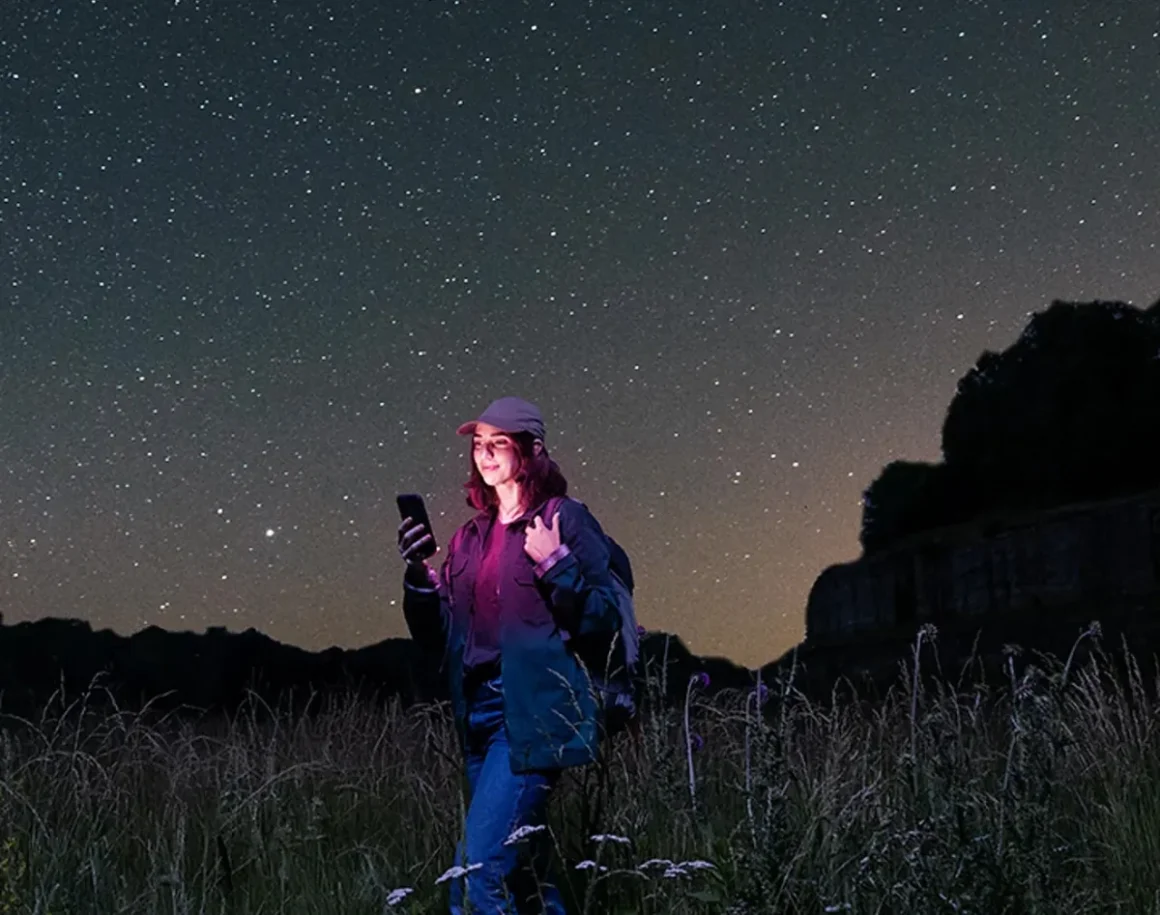
T-Mobile has just announced the launch of its highly anticipated beta program for Starlink’s direct-to-smartphone satellite service, which promises to bring text messaging capabilities to select devices in U.S. cellular dead zones starting in early 2024. In a move that could revolutionize communication for those living or traveling in rural or underserved areas, this new service will allow users to send and receive messages via satellite—no cellular tower required.
This is a significant step forward in providing connectivity to remote areas, thanks to T-Mobile’s partnership with SpaceX’s Starlink network. The beta program is set to roll out in phases, with priority access being granted to first responders due to limited initial capacity. But for those who aren’t first responders, T-Mobile is offering the opportunity to register for this innovative service, which will be available at no extra charge during the beta phase.
A Glimpse into the Future of Connectivity
T-Mobile’s direct-to-smartphone satellite service, powered by SpaceX’s Starlink constellation, will allow customers in most areas of the U.S.—even those lacking traditional cell towers—to send text messages. This will be especially beneficial in places where terrestrial cell coverage is sparse or nonexistent, such as national parks, rural towns, or remote mountain regions. Unlike Apple’s satellite messaging service launched in 2022 with the help of Globalstar, T-Mobile’s Starlink-powered connectivity won’t require users to aim their phones directly at the sky to get a signal. All you need is a clear view of the sky, and the service will work seamlessly in most conditions.
How the Service Works
The direct-to-smartphone service works by utilizing Starlink’s satellite constellation, which currently includes over 300 satellites designed to carry payloads capable of connecting directly to smartphones. With permission from the Federal Communications Commission (FCC), SpaceX is allowed to operate up to 7,500 satellites in the U.S., enabling Starlink’s reach across vast stretches of land that are traditionally outside the coverage of cell towers—an area of 1.29 million square kilometers (about 500,000 square miles).
The system will leverage T-Mobile’s radio frequencies to establish a direct link between smartphones and Starlink satellites, bypassing the need for traditional cell towers. Whether you’re exploring remote wilderness or driving through a cell service black spot, you’ll be able to send a text and connect with others—even if you’re in the middle of nowhere.
What You Need to Know About the Beta Program
The beta test is open to T-Mobile customers who have compatible devices and postpaid voice plans. The carrier hasn’t disclosed which devices will be supported at launch, but it has confirmed that the service will expand to more devices over time via software updates. While the company has not provided specifics on capacity or restrictions, it has stated that the service will be available “in most areas and most of the time,” although availability may fluctuate depending on network demand.
As with most new technology, the beta phase will help T-Mobile fine-tune the service and gather feedback from users before a full commercial launch. Given the experimental nature of the service, spots are limited, and there’s no guarantee that everyone who signs up will get immediate access. However, first responders will receive priority access during this initial rollout, allowing emergency personnel to stay connected in areas where traditional cell coverage may be unavailable.
Global Expansion on the Horizon?
While the current focus is on the U.S., T-Mobile has also established reciprocal roaming agreements with international carriers. These agreements allow T-Mobile customers to use Starlink connectivity when traveling to countries like Japan (KDDI), Australia (Optus), New Zealand (One NZ), Switzerland (Salt), Chile and Peru (Entel), and Canada (Rogers). However, T-Mobile has yet to announce when—or if—the service will expand beyond these regions.
In terms of global expansion, the company is still working with the Federal Communications Commission (FCC) to ensure that the service doesn’t interfere with other communications networks. The FCC’s approval of SpaceX’s service hinges on its ability to provide “Supplemental Coverage from Space” (SCS) without disrupting existing terrestrial communications infrastructure. The regulator has yet to decide whether SpaceX can increase the radio emission power of its satellites to support more bandwidth-intensive services like voice calls.
The Future of Satellite Communication
T-Mobile’s partnership with SpaceX could be a game-changer in terms of providing reliable communication access to underserved areas. Whether you live in a rural area where cell towers are few and far between, or you frequently travel to places where cellular coverage drops off the map, this new service could make a huge difference. However, as with any emerging technology, there are still hurdles to overcome.
The service is still in the beta phase, and many questions remain about its long-term reliability, scalability, and cost. While T-Mobile has already demonstrated the potential of satellite communication in emergency situations, the commercial viability of the service remains to be seen. Will it be able to handle large volumes of users? Will satellite bandwidth be sufficient for everything from texting to voice calls? These are some of the challenges that SpaceX and T-Mobile will need to address as they refine the service.
Rivals and the Competitive Landscape
T-Mobile’s venture into direct-to-smartphone satellite connectivity is not without competition. Rivals like AT&T and Verizon are also eyeing the future of satellite-based communication. Both companies have entered partnerships with AST SpaceMobile, which launched its first five commercial spacecraft in September 2023 aboard a SpaceX Falcon 9 rocket. These satellites are designed to provide similar satellite-based services, and AT&T and Verizon are currently seeking FCC permission to test their own direct-to-smartphone solutions.
This competition in the satellite communications space means that, in the coming years, consumers may see more options for staying connected in the most remote corners of the world. The stakes are high as these companies race to develop and deploy technologies that could offer internet, voice, and text messaging capabilities to every smartphone, regardless of location.
The Road Ahead: What’s Next for T-Mobile and Starlink?
As T-Mobile prepares for the broader launch of its satellite texting service, the next few months will be critical in determining how well the service performs in real-world conditions. Customer feedback from the beta program will likely shape the next steps, and T-Mobile has indicated that it plans to expand the service to more devices as software updates roll out. There’s also the potential for future enhancements, such as the inclusion of voice calling capabilities.
This beta launch is just the beginning of what could become a revolutionary service, with the potential to transform how we communicate in areas that have long been neglected by traditional cell networks. Whether you’re a first responder, an outdoor enthusiast, or someone who just wants reliable service when they’re out of range, T-Mobile’s partnership with Starlink could be a lifeline in an increasingly connected world.