
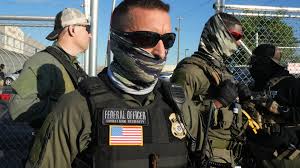
Masked and Unchecked? ICE Chief Backs Controversial Arrest Tactics as Trump’s Deportation Machine Accelerates
As immigration raids surge across the U.S. under Donald Trump’s renewed mass deportation agenda, the head of U.S. Immigration and Customs Enforcement (ICE), Todd Lyons, is standing firm on one of the most contentious issues: allowing ICE agents to wear face masks during arrests.
Critics say the practice fuels fear, undermines accountability, and invites abuse. But Lyons insists it’s about protecting agents in a hostile political climate—despite mounting calls from legal experts, state attorneys general, and even city mayors to outlaw the tactic.
The Policy: ICE Agents in Masks—A Tool or a Threat?
Lyons: “Not a Fan, But I’ll Allow It”
Appearing Sunday on CBS’s Face the Nation, Acting ICE Director Todd Lyons addressed growing concerns that masked ICE agents are operating with impunity, detaining immigrants without identifying themselves and, in some cases, even impersonated by criminals.
“That’s one of our biggest concerns,” said Lyons. “I’m not a proponent of the masks … but if that’s a tool that keeps our officers and their families safe, then I will allow it.”
Lyons pointed to a rise in threats and alleged assaults on agents as justification. He cited an 830% increase in assaults, although data shows only 10 reported assaults between January and June 2024—down from 79 during the same period the previous year.
That discrepancy raises critical questions about whether the threat level is being overstated to justify aggressive tactics.
Legal Experts and Lawmakers Sound the Alarm
“It’s a Crisis of Accountability”
Civil rights groups and legal observers argue that masking federal agents undermines due process, enables abuse, and leaves victims with little legal recourse when things go wrong.
“The use of masks is one among a panoply of legal issues presented by the administration’s recent actions,” said the New York City Bar Association, calling the policy a “significant issue that can—and should—be immediately addressed.”
In June, a coalition of 21 state attorneys general, including New York’s Letitia James, urged Congress to ban the use of identity-concealing masks by immigration officers. The letter called for legislation requiring agents to clearly display names, agency badges, and identification numbers during enforcement actions.
Meanwhile, in California, lawmakers introduced the No Vigilantes Act, which would legally prohibit federal agents from operating anonymously in public spaces.
“We have a police department in Los Angeles that faces crime daily—and they’re not masked,” said LA Mayor Karen Bass on ABC News. “I don’t think you have a right to wear a mask and snatch people off the street.”
Real-World Consequences: Violence and Fraud
When Criminals Pose as ICE Agents
Several high-profile cases have highlighted the risk of criminals exploiting the anonymity of ICE’s masked operations:
-
January 2025 (Raleigh, NC): A man allegedly kidnapped and raped a woman while posing as an ICE officer, threatening her with deportation.
-
February 2025 (Brooklyn, NY): A man attempted to rape a 51-year-old woman, also claiming to be an ICE agent.
-
April 2025 (Florida): A woman impersonated immigration enforcement to kidnap her ex-boyfriend’s wife from her workplace.
These incidents illustrate how the lack of public-facing identification creates a climate ripe for exploitation, particularly in immigrant communities already fearful of law enforcement.
ICE’s Expanding Toolkit: From Masks to Medicaid
Using Healthcare Data to Track Undocumented Immigrants
Lyons also confirmed in his CBS interview that ICE has access to Medicaid data—a development that shocked privacy advocates and healthcare professionals. Although undocumented immigrants are not eligible for Medicaid, ICE is reportedly using the database to identify and locate suspected undocumented individuals.
“This is a betrayal of privacy,” said one immigrant rights advocate. “You’re turning healthcare infrastructure into a surveillance tool.”
According to the Pew Research Center, 84.2% of Medicaid recipients are U.S.-born. Only 9.2% are foreign-born non-citizens—and many of them are lawfully present. That raises alarms about data misuse and the targeting of lawful residents.
The Bigger Picture: Trump’s Deportation Dragnet
Raids, Roundups, and Unmarked Cars
Since Trump’s return to aggressive immigration enforcement in 2025, ICE agents have been flooding U.S. cities, conducting arrests at homes, workplaces, and public areas.
Social media is filled with viral videos of ICE agents in black masks and body armor, forcing people into unmarked vehicles without stating who they are or why the person is being detained.
Lyons denies these characterizations.
“I do kind of push back on the criticism that they don’t identify themselves,” he said. “Our officers wear body armor marked ‘Police’.”
However, immigration officers are not police—and in many cases, “POLICE” is the only visible identifier. This has further confused the public and blurred lines between local law enforcement and federal deportation efforts.
Rising Tensions, Eroding Trust
ICE vs. Public Perception
The policy of masked raids is just one piece of a much larger trust crisis between ICE and the public. While ICE insists its goal is enforcement and safety, critics say its tactics are increasingly militarized and opaque.
“This is not just about safety,” said an immigration attorney in New York. “This is about scaring people into submission and making it nearly impossible to fight unlawful detention.”
As the Trump administration pushes forward with plans to deport up to 1 million people per year, many fear that civil liberties and constitutional norms are being cast aside.
What’s Next: Congress Faces Pressure to Intervene
With a growing number of states speaking out and legislative proposals on the table, Congress now faces a critical choice: will it move to restrain ICE, or will mask-wearing remain the new norm in federal immigration enforcement?
Meanwhile, Todd Lyons remains unapologetic.
“We need to protect our agents,” he says. “And if that means using masks, so be it.”
But for millions of immigrants and their advocates, the question isn’t whether ICE officers feel safe—but whether American democracy does when accountability is covered up—literally.