
FBI Establishes First Permanent Office in New Zealand Amid Geopolitical Tensions
Washington doubles down on Indo-Pacific strategy with new FBI office in Wellington to counter China, cyber threats, and transnational crime.
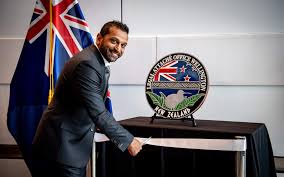
In a landmark move symbolizing deepening U.S.-New Zealand intelligence ties, FBI Director Kash Patel officially opened the bureau’s first permanent office in New Zealand on Thursday, calling it a “historic moment” for the Five Eyes intelligence alliance.
Speaking at the U.S. embassy in Wellington, Patel outlined a strategic vision focused on countering Chinese influence in the Indo-Pacific, combating cybercrime and ransomware, and strengthening cross-border law enforcement efforts. The move reinforces America’s growing security footprint in the region and signals that New Zealand is no longer just a passive partner, but a frontline state in global intelligence cooperation.
A Permanent Presence: What’s Different This Time?
From Sub-Office to Strategic Hub
While the FBI has had a sub-office in Wellington since 2017—technically under the Canberra attaché—it never had a standalone operation in New Zealand. That changed this week, with Patel announcing that Wellington will now serve as a full-fledged FBI Legal Attaché office.
The new office will handle law enforcement partnerships across not just New Zealand but also Antarctica, Samoa, Niue, Cook Islands, and Tonga—signaling an expanded regional mandate that aligns with growing U.S. concerns in the Pacific.
Priorities for the FBI in New Zealand
Patel laid out a comprehensive mission for the FBI’s presence, citing several strategic priorities:
1. Countering the Chinese Communist Party (CCP)
Patel made clear that the FBI’s presence is part of broader efforts to “counter the CCP” in the Indo-Pacific Command (IndoPacom) area, reflecting mounting U.S. pressure on China over cyber intrusions, economic coercion, and regional influence campaigns.
2. Tackling Cybercrime and Ransomware
With global ransomware attacks skyrocketing, the FBI will work closely with New Zealand’s intelligence and cybersecurity agencies to detect, disrupt, and deter malicious cyber activity. This includes nation-state threats and transnational criminal syndicates, both of which have increasingly targeted Pacific networks.
3. Combating Narcotics and Transnational Organized Crime
Patel also emphasized cracking down on international drug smuggling, online child exploitation, and other cross-border offenses. The new attaché office will enable real-time coordination between the FBI and New Zealand Police, making it harder for criminals to evade justice by exploiting international borders.
Deepening Five Eyes Intelligence Ties
Completing the Circle
With this new office, the FBI now has permanent representation in all Five Eyes countries: the United States, United Kingdom, Canada, Australia, and now New Zealand.
Patel described the move as “a powerful message” that the U.S. is committed to collective intelligence, law enforcement, and national security—and no Five Eyes partner will be left behind as threats evolve.
New Zealand’s Strategic Shift
From Quiet Observer to Active Collaborator
New Zealand has long been considered the “quietest” member of the Five Eyes, often opting for a low-profile approach to intelligence and defense cooperation. But the global environment is shifting.
During Patel’s visit, he met with key members of the New Zealand government, including Police Minister Mark Mitchell and Intelligence Minister Judith Collins.
Collins said the two sides had “exchanged a range of insights” on transnational organized crime, counterterrorism, espionage, and cybersecurity—suggesting a widening scope of bilateral cooperation.
Mitchell was more direct: “Patel’s visit should send a clear message to criminals that they cannot hide behind an international border.”
Why This Matters Now: The Bigger Picture
The Pacific Is No Longer a Backwater
The move comes amid heightened concern over China’s growing presence in the South Pacific, including security deals with island nations and infrastructure investments that Western powers view as potentially militaristic in nature.
The U.S. has responded by expanding diplomatic posts, aid packages, and now—via the FBI—law enforcement capabilities.
Trump Administration’s Indo-Pacific Doctrine
Kash Patel’s appointment as FBI Director and his visit to New Zealand also reflect Donald Trump’s Indo-Pacific pivot during his second term. Under Trump 2.0, the U.S. has taken a more aggressive stance on regional security, with Patel acting as both enforcer and envoy.
Despite his association with recent controversies (including the Epstein case), Patel has emerged as a key figure driving the law enforcement and intelligence agenda of the administration.
Potential Impact on Business and Cybersecurity
For business leaders and tech executives in the Pacific, the FBI’s new presence brings both reassurance and scrutiny:
-
Cyber resilience programs are likely to intensify, especially in critical sectors like finance, utilities, and telecom.
-
Companies with ties to Chinese vendors or infrastructure may face increased regulatory oversight.
-
Joint investigations into financial fraud, IP theft, and data breaches will accelerate.
While this could raise compliance costs, it also creates opportunities for private-sector partnerships in cybersecurity and forensic tech solutions.
A Strategic Signal with Long-Term Implications
The opening of an FBI office in New Zealand is more than a bureaucratic expansion—it’s a strategic signal to allies, adversaries, and corporations alike. It marks New Zealand’s shift from a quiet intelligence partner to an active player in Indo-Pacific security.
For the U.S., it means boots-on-the-ground capability in a region increasingly shaped by cyber threats, organized crime, and geopolitical rivalries.
And for the Five Eyes alliance, it completes the intelligence circle—just as global tensions make unity more vital than ever.